
CHAPTER 14
The Dordogne Portfolio
14 minute read
The closet at the end of the hallway had a door that stuck. Mila had mentioned it to Stefan three times. He had measured the frame, diagnosed seasonal wood swelling, and added it to a list titled HOUSE: MINOR REPAIRS, which lived on his laptop in a spreadsheet she had never opened. The door still stuck.
She pulled it open on a Saturday afternoon in October, the wood giving with a sound like a held breath released. Inside: winter coats, the vacuum cleaner, a box of tax returns from years she could not remember filing. On the top shelf, behind the duffel bag he took to the gym, the portfolio.
Black leather. Scuffed at the corners. The zipper stiff.
She had stood here before. Three weeks ago, in the dark, her fingers on the leather, not opening it. The night she had lain in bed and listened to Stefan breathe and understood that she knew the portfolio was there. Not as a memory. As a question.
Now she pulled it down. It was heavier than she expected, or perhaps she had forgotten what things weigh when you have not held them in a long time. She carried it to the dining room where the afternoon light fell across the oak table in long, warm rectangles.
The leather was cracked along the spine. A water stain on the upper right corner, old, from some journey she could not place. The zipper pull was tarnished brass, engraved with a cursive F that had worn nearly smooth. Her father had given her this portfolio for her seventeenth birthday, the summer she went to Aunt Mathilde's. She remembered his hands presenting it across the kitchen table in Lyon, the chalk dust still in the creases of his fingers.
She unzipped it.
The smell came first. Paper and pigment and something underneath both: the particular mustiness of work that has been sealed away from light and air for twenty years.
Watercolors, mostly. A few small oils on board, no larger than a paperback. She lifted the first one out.
A walnut tree. Not the whole tree but a section of the canopy, the leaves rendered in a green so layered it was almost black at the center, thinning to a translucent lime where the sun came through. She had painted it from below, lying on her back in the grass, looking up into the branches. She remembered the grass. She remembered the ants.
She was seventeen. She had arrived at Aunt Mathilde's farmhouse near Sarlat-la-Caneda in July, sent by her father because the summer after her mother's death had been airless and gray and Lyon had become a city of closed doors. Henri had called his sister and said, simply, "Take her." And Mathilde had.
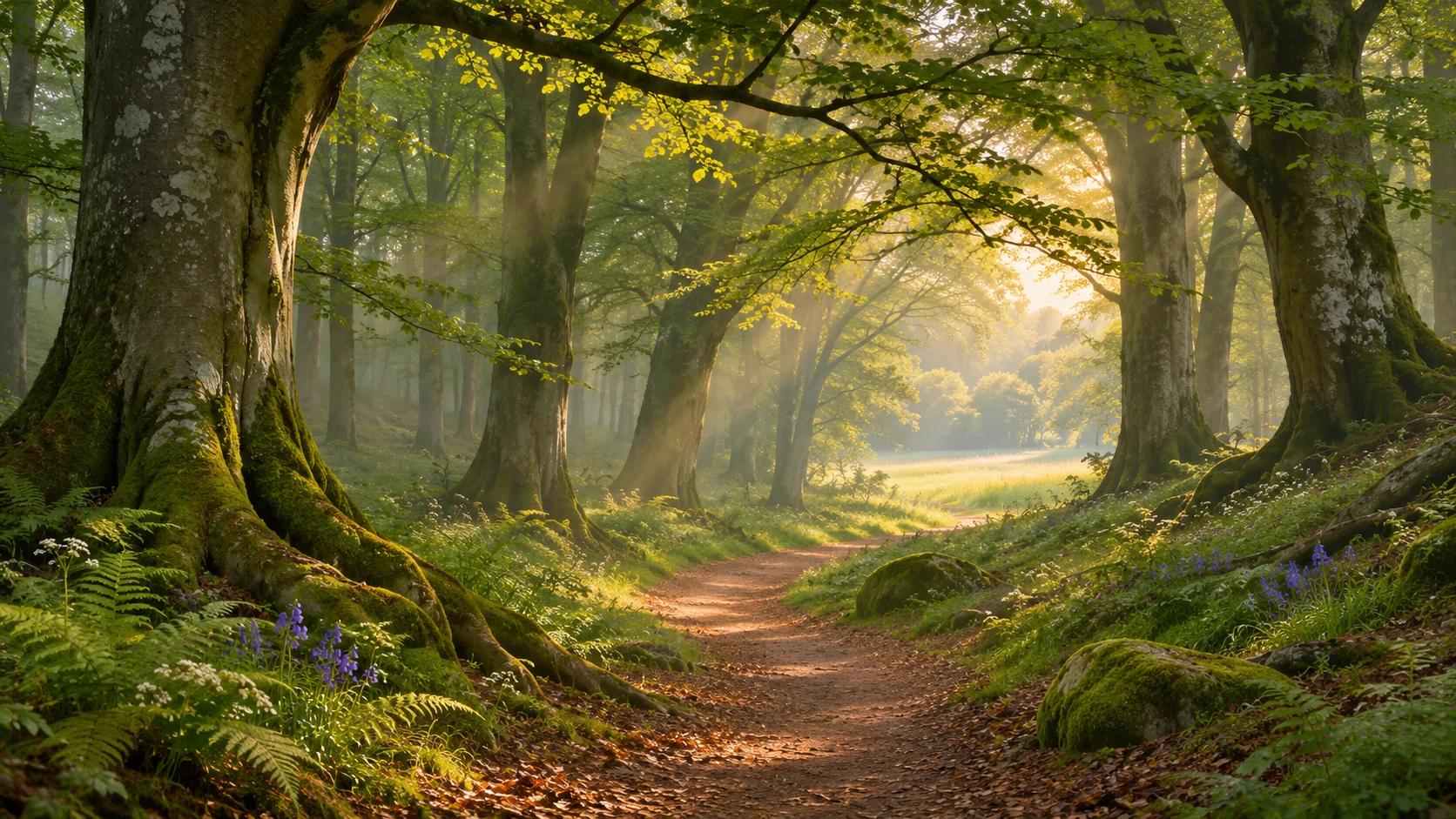
The farmhouse was stone. Everything in the Dordogne was stone, or so it had seemed to Mila at seventeen: the houses, the walls, the cliffs above the river, the medieval towers perched on ridges like teeth in the jaw of something enormous and ancient. The stone was golden in the morning, white at noon, and at sunset it turned the color of honey, the same impossible honey she would later find on Table Mountain, though she did not know that yet.
She lifted out the next painting. The view from Mathilde's kitchen window: the valley opening below the farmhouse, the Dordogne River a silver thread at the bottom, the far bank rising in limestone cliffs. She had painted it on her second morning, standing at the window with her watercolors balanced on the sill, while Mathilde moved behind her making coffee and humming the sound a person makes when they are entirely at home.
The painting was rough. The proportions were slightly wrong: the river too wide, the cliffs too close. A seventeen-year-old's error of enthusiasm, placing everything within reach because everything felt within reach. But the colors were right. The green of the valley was a green that existed nowhere else, not in Lyon, not in Cape Town, not in Virginia. A green that came from limestone soil and Atlantic rain and walnut trees and a thousand years of cultivation. Not wild but not tame. A green that had been worked by human hands for so long that the land and the labor had become the same thing.
Stefan found her at the table an hour later, the paintings spread across the surface like cards in a game whose rules he did not know.
"I opened it," she said.
He crossed the room and stood beside her and looked at the paintings the way he always looked at her work: with his whole attention, his body very still, his hands at his sides.
"These are from the Dordogne," she said. "I painted them when I was seventeen. The summer I stayed with Aunt Mathilde."
He picked up the walnut tree. Held it at arm's length. Tilted it slightly so the afternoon light caught the surface.
"The green," he said.
"Yes."
"It's different from anything you paint now."
It was true. The green in her Virginia landscapes was the green of observation. She had mixed it carefully: sap green, yellow ochre, sometimes a thread of raw umber. It captured the Shenandoah, the rolling Piedmont. But the green in the Dordogne paintings was the green of recognition. Of knowing a place in the body, not just the eye.
"These are from before I knew how to paint," she said. "Technically they are full of problems."
"You were working the way you worked when I met you," Stefan said. "In Cape Town. The exhibition. You painted like this then."
He was right. The Cape Town paintings had this same quality. Not polish. Urgency. The urgency of a brush trying to keep up with what the eye was seeing, trying to hold the light before it changed.
She had lost that somewhere. In the workshops, in the careful barns of Fauquier County. She had become good, and good had cost her something she could not name until now, looking at these clumsy, radiant paintings by a girl who did not know the rules and therefore could not follow them.
She laid them out by subject. The walnut trees: the canopy from below, a single trunk against a stone wall, a grove at the edge of a field with the late sun coming through the leaves like light through stained glass. Mathilde had told her that the walnut trees were the Dordogne's wealth. "Before the tourists, before the foie gras, there were the walnuts."
The villages. Sarlat from the hill above: rooftops of dark slate, the cathedral tower. Domme on its cliff. Beynac, its castle rising out of the rock as though the rock had grown it.
The river. Painted from the bridge at La Roque-Gageac, the water green and slow, the gabarre boats moored at the bank.
The market at Sarlat. A watercolor crowded with color: the red of tomatoes, the gold of mirabelle plums, the deep purple of figs split open to show their pink interior. She had painted this from the steps of the old post office, sitting cross-legged with the pad on her knees, while Mathilde worked her way through the stalls with a wicker basket and the serene authority of a woman who had been buying from these vendors for forty years.
Stefan picked up the market painting. He looked at it for a long time.
"Tell me about the market," he said.
"Saturday morning. Every Saturday. The whole town comes. Walnuts, of course. Walnut oil, walnut cake, walnut liqueur. Foie gras from the farms. Cheeses I cannot describe to you because the words do not exist in English. Truffles in the winter, black truffles, the vendors sell them from the backs of their cars and the whole square smells like the forest floor after rain."
She was talking with her hands now. She did not notice this. Stefan did.
"And the strawberries in summer. Tiny ones, from Perigord. You eat them with cream and sugar and they taste like what strawberries were trying to be before the supermarkets ruined them. And the bread. I do not remember the baker's name, but his bread had a crust you could hear from across the market. Mathilde would buy two loaves and by the time we walked home one would be half gone because I could not stop eating it."
She stopped. She was standing in the dining room of a house in Virginia, talking about bread from twenty years ago, and she could taste it.
"The light in these paintings," Stefan said. "It's different from your other work. Not just the color. The quality."
"The Dordogne light is old," she said. She heard herself and remembered saying something similar to him, years ago, about European light. But this was more specific. "Not old like museum light. Old like the light has been falling on the same stone and the same trees and the same river for so long that it has learned the shapes. It does not fall on the landscape. It belongs to it."
He sat down at the table. He pulled the paintings toward him, one at a time.
"Your aunt's farmhouse," he said. "What happened to it?"
"Mathilde died in 2009. She left it to my cousin Thierry. He sold it."
"And the farmhouses near it? The area around Sarlat?"
She looked at him. "Why are you asking?"
He was holding the painting of Domme on its cliff, turning it so the light caught the stone walls she had painted in pale gold and warm grey.
"Because I am trying to understand the place," he said. "Not as a painting. As a place."
"It is the most beautiful place I have ever been," she said. And then, because she was French and because precision in matters of beauty was a national obligation: "Not the most dramatic. Cape Town is more dramatic. The Dordogne is something else."
She searched for the word. In French it would have come immediately: doux. In English the translation, soft, was wrong. Soft implied weakness. Doux implied tenderness. A landscape that did not assault you with its beauty but invited you into it, the way a good meal invites you to sit down, the way a warm room invites you to stay.
"Gentle," she said. "But not passive. The Dordogne is gentle the way a river is gentle: it has shaped the stone, over centuries, by not stopping."
Stefan set down the painting. She could see the shift happening. Not a decision. Not yet. A reorientation. The way a compass needle swings when the magnetic field changes, not all at once but in a series of small corrections, each one bringing it closer to north.
"What would it cost?" he said.
"What would what cost?"
"A farmhouse. In the Dordogne. Near Sarlat."
She sat down across from him. "Stefan."
"I am not proposing anything. I am asking a question."
"Less than here. Property in the Perigord is not Paris. The villages are small. Young people leave for Toulouse, for Bordeaux. The farmhouses are there."
He nodded. She recognized what was happening behind his eyes. He was building a framework. Not a plan, not yet, but the scaffolding that would hold a plan. She had seen him do this with database systems, with kitchen renovations. He began with structure. He would fill in the numbers later.
"Healthcare?" he said.
"France. The healthcare is France."
He almost smiled. He was calculating. Not the specific numbers, which he did not have yet, but the shape of the calculation.
"My pension," he said. "If I retired at fifty. The severance, the 401k, the investments. Your teaching income, which would stop. The sale of this house, which has appreciated. The exchange rate, euro to dollar."
"You are building a spreadsheet in your head."
"I am identifying the parameters."
"You are building a spreadsheet in your head and you have not even seen the place."
He looked at her. Then he looked at the paintings.
"I have seen it," he said.
She understood then what she had done. She had not argued for France. She had opened a portfolio. She had laid the paintings on the table. And the paintings had said what she could not say in words, because words were Stefan's medium and hers was color, and the case for the Dordogne was not a case that words could make.
Stefan picked up the painting of the view from Mathilde's kitchen window. He held it beside the window of their dining room, where the Virginia afternoon came through the glass, flat and competent and without mystery.
The two lights, the one in the painting and the one in the room, made their own argument.
"Mathilde used to say that the Dordogne is where France remembers what it was before it became France," Mila said. "The cave paintings at Lascaux are twenty minutes from Sarlat. People have been living in that valley for forty thousand years. They painted on the walls of the caves because the place made them want to paint. I understood that at seventeen and I understand it now."
"You are making a case," Stefan said.
"I am telling you what I know."
"You are making a case, and it is a very good one, and you are making it with paintings instead of words because you know that I will argue with words and I cannot argue with paintings."
"Can you argue with paintings?" she asked.
"No," he said. "That is the problem."
But it was not a problem. She could see that. He was sitting at their dining table with the paintings spread before him, and he was looking at them the way he had looked at her paintings in the Hiddingh Hall annex twenty-seven years ago. Not as art. As evidence. Evidence of a place that could hold them. Evidence of a life that was not content but happy.
"The foie gras," he said. "How is it prepared?"
She laughed. Not the sharp laugh of the woman who had been told her work was lovely. A real laugh, warm and sudden. Because Stefan was not asking about foie gras. He was asking about the place the way he asked about everything: by learning its systems. Its inputs and outputs. Its local logic. The food was the beginning of the map, and the map was how Stefan van den Berg learned to love a place.
"In the Perigord," she said, "the foie gras is prepared with salt and pepper and nothing else. The duck is local. Mathilde made it every Christmas. She would not tell me the recipe because she said the recipe was not the point. The point was the duck and the weather and the years of doing it the same way in the same kitchen."
"Your aunt sounds like someone I would have liked."
"You would have driven her mad with your systems. She would have loved you for it."
Outside, the Virginia afternoon was settling into a pale, diffuse light that was adequate for everything and ideal for nothing. The trees along their street were turning, the first reds and golds of an autumn that would be beautiful and brief and then gone.
He looked at the paintings. She watched him look. What she saw in his face was not enthusiasm. Stefan did not do enthusiasm. What she saw was recognition. The same expression he had worn when he first saw the architecture of a system that worked, when the solution presented itself not as invention but as discovery.
"We would need to learn the tax implications," he said. "Dual residency. Asset transfer. There are treaties between the US and France. And the visa requirements, though your citizenship simplifies that considerably."
"You are building the spreadsheet."
"I am identifying the parameters," he said again. But this time he smiled. The full smile, the one she had seen at their wedding, the one that changed his face from composed to luminous.
She reached across the table and took his hand. His fingers closed around hers, warm and precise, the way they always did: as though holding her hand were not a gesture but a specification, a thing he had designed and tested and knew to be correct.
The paintings lay between them. The walnut trees and the villages and the river and the market. Twenty years in a closet, carried across an ocean, waiting.
Mila looked at Stefan looking at the paintings, and she knew, with the certainty she usually reserved for color, that this could happen. Not would. Could. The difference mattered. Would was a plan, and plans were Stefan's territory, and he would build one, thorough and precise, with tabs and formulas and a notation system she would never fully understand. But could was the moment before the plan, the moment when the possibility became real, when the weight of it shifted from fantasy to future.
He was still holding her hand. The light in the dining room was changing, the afternoon deepening toward evening, and the paintings on the table seemed to glow, their colors holding steady against the dimming room, the Dordogne green and the limestone gold refusing to fade, insisting on their own light, the way good paintings always do.
"Tell me about the truffle season," Stefan said.
And she did.