

CHAPTER 21
The Studio
27 minute read
The barn had been a barn for two hundred years. Longer, perhaps. The stone was the same stone as the house, the same gold-grey limestone that held heat in summer and cold in winter and light at all hours, as though the walls had learned, over centuries, to be attentive to whatever fell on them. The roof beams were chestnut, darkened to the color of tobacco, each one hand-adzed, the tool marks still visible if you ran your fingers along the grain. Someone had built this barn with patience, which is to say, with love, because patience and love are not the same thing but they share a root system, and what grows from one often becomes the other.
The conversion had taken three months. Jean-Pierre had supervised, or rather, Jean-Pierre had done the work while Stefan supervised, which meant Stefan held the measuring tape and the flashlight and occasionally handed tools to the old stonemason with the tentative precision of a surgical assistant who has read the textbook but never seen the operation. The roof was sound. The walls needed repointing in the northeast corner. The floor, packed earth for two centuries, was leveled and laid with flagstones salvaged from a farmhouse demolition near Domme, each one a slightly different shade, so that the floor had the quality of a painting made entirely of greys.
The north wall was the reason. Mila had known it before she had known anything else about the farmhouse, before she had seen the orange tiles in the kitchen or the damp stain in the bedroom or the garden's brambled collapse. She had stood in the barn's doorway on their first morning, the February cold still in the stone, and looked at the north wall and said, "Here."
Jean-Pierre had cut the windows. Two of them, tall and deep-set, their frames painted the same faded blue as the rest of the house because Jean-Pierre did not believe in new colors for old buildings. The glass was double-glazed, Stefan's one concession to modernity in a structure that otherwise resisted it. The windows faced north, which meant the light that entered was indirect, reflected off the sky rather than cast by the sun, and it was this light, constant and cool and without drama, that made the barn a studio. Direct sun was theatrical. It changed every hour, threw shadows, created contrasts that the eye loved and the painter could not trust. North light was honest. It showed you the color as it was, not as the sun wanted it to be.
When the windows were finished and the floor was laid and the walls repointed and the door rehung on new hinges, Mila carried her things across the courtyard. The easel first, the old one, oak and brass, bought in an antique shop in Alexandria for forty dollars. Then the table: a farm table Stefan had found at the brocante in Sarlat, scarred and heavy, its surface already marked with decades of use, which meant her paint stains would be additions to a history rather than damage. The canvases, blank, leaned against the south wall. The jars of brushes. The tubes of oil paint, arranged not by pigment family, as Stefan had once proposed, but by instinct, by the order in which her hand reached for them. Cadmium yellow beside burnt sienna beside cobalt blue, because these were the colors that began a painting the way the first sentence begins a letter: with intention, before the meaning arrives.
She set up the easel facing the north windows. She opened the turpentine. The smell entered the barn and became the studio's first fact, sharp and medicinal and to Mila as familiar as bread, because she had been breathing turpentine since she was seventeen, and the smell was not a smell but a signal, the way a bell is not a sound but a summons.
Minou appeared in the doorway. He stood there for perhaps ten seconds, assessing, his damaged ear cocked forward, his amber eyes moving across the flagstone floor, the easel, the table, the jars. Then he walked to the north-facing window and jumped onto the sill.
He settled himself with the slow, deliberate precision of a creature who has been looking for this particular surface his entire life and has found it. He wrapped his tail around his paws. He looked out the window at the walnut tree, the stone wall, the valley rolling south in folds of green.
He did not move again for the rest of the morning.
The first painting was the view from the kitchen window.
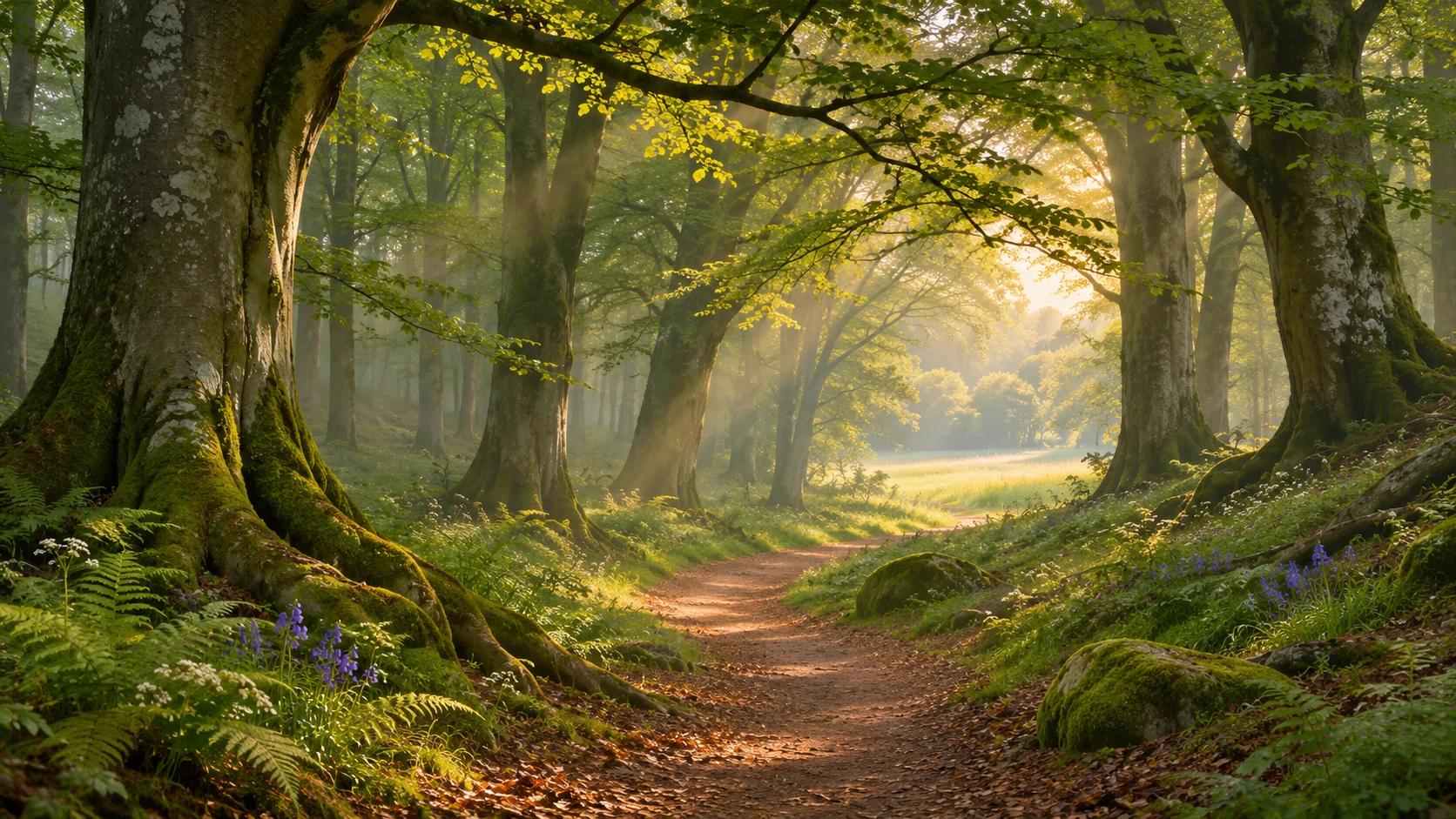
She had been looking at it for months. Through the glass, above the sink where the corroded pipes had been replaced and the stone basin still stood, the walnut tree. Behind it, the low wall that marked the garden's southern edge. Beyond that, the valley, falling away in terraces of field and forest, the far ridge a blue-grey line against the sky. She had looked at this view while washing dishes, while drinking morning coffee, while waiting for the kettle. She had looked at it in rain and in fog and in the hard light of midsummer noon and in the amber light of October evenings. She had looked at it so many times that looking had become a kind of meditation, the view entering her body through her eyes the way food enters through the mouth, sustaining something that had been hungry without her knowing it.
Now she carried it across the courtyard and into the studio and set it on the easel. Not the view itself. The canvas was blank. But she carried the view in her eye the way a singer carries a melody in the body, and the eye knew what to do.
She squeezed paint onto the palette. Sap green. Yellow ochre. A thread of raw umber. Titanium white. She mixed with the palette knife, working the colors together until the green on the blade was the green she had seen through the kitchen window that morning, the green of walnut leaves in late spring, a green so specific to this valley and this light that no other green would do.
She picked up a brush. A flat, number ten, hog bristle, stiff enough to push the paint but flexible enough to listen. She loaded it. She touched the canvas.
The hours disappeared.
This was the thing she had never been able to explain to anyone who did not paint, and which she had stopped trying to explain, because the explanation always sounded either mystical or pretentious, and it was neither. It was mechanical. The hand held the brush. The brush carried the paint. The paint met the canvas. These were physical acts, governed by the same laws that governed hammering a nail or kneading bread. But somewhere in the sequence, between the loading of the brush and the lifting of it from the surface, the ordinary mechanics of arm and wrist and bristle and pigment produced something that had not existed before, and this production consumed time the way fire consumes oxygen: completely, without remainder.
She painted the walnut tree first. The trunk, a vertical anchor in warm grey-brown, the bark suggested with a dry brush dragged sideways, the texture emerging not from detail but from the direction of the stroke. The canopy, built in layers: the dark interior first, then the mid-tones, then the lights where the leaves caught the sky. She mixed the greens on the canvas itself, wet into wet, letting the colors find their own boundaries the way the branches found their own shapes, not drawn but grown.
The stone wall next. A horizontal line below the tree, the ochre of the limestone warm against the green, each stone implied rather than rendered, because a wall seen from a kitchen window is not a catalogue of individual stones but a continuity, a line the eye follows without stopping.
The valley beyond. Here the colors cooled. The greens became blue-greens, the ridges softened, the detail fell away into atmosphere. She used a larger brush, looser strokes, more medium mixed with the paint so the color was thinner, more transparent, the way distance makes things transparent, as though the air between here and there were a glaze the landscape had to pass through.
She stepped back. She looked. She mixed a warmer green and touched the lower left corner where the garden met the wall. She looked again. She cleaned the brush in turpentine, the bristles releasing their color into the jar in slow, curling clouds. She loaded a small round brush with a color she had mixed without deciding to: cadmium yellow, a thread of burnt sienna, a touch of yellow ochre. The ginger of marmalade jars in English paintings.
A small shape on the windowsill. Not a portrait. A presence.
She painted that view forty-seven times in the first two years. She did not count them. Stefan counted them, because Stefan counted everything, and one evening he stood in the studio doorway and said, with the quiet satisfaction of a man reporting a census, "Forty-seven."
"You counted my paintings."
"I count what matters."
Forty-seven versions of the same view. The walnut tree, the wall, the valley. And no two of them the same, because the light was never the same twice. The morning light of March was not the morning light of August. The valley in fog was not the valley in frost. The tree in leaf was a different creature from the tree in winter, when its bare branches drew a calligraphy against the sky that she could not have invented if she had tried.
She had not painted like this in Virginia. In Virginia, each painting had been a separate project, conceived and executed and finished and framed and taken to a gallery or a fair, where it either sold or did not sell, and she moved on to the next. There had been a transactional quality to the work. Not mercenary, not calculated, but bounded. A painting was a thing she made for a purpose, and when the purpose was fulfilled, the painting was done.
Here the purpose had changed. Or rather, here there was no purpose beyond the painting itself, and this absence of external purpose was, she understood, the most purposeful thing she had ever done. She was not painting for the Athenaeum or for the Falls Church holiday fair or for the silver-haired women who said lovely. She was not painting to earn or to prove or to justify the room she occupied.
She was painting because the walnut tree was there, and the light was there, and the valley was there, and her hand knew what to do with them.
She found the tree in June, on a walk she had not planned.
The ridge above the farmhouse rose steeply to the east, a climb of perhaps thirty minutes through scrub oak and limestone outcrops and wild thyme that released its scent when you stepped on it, so that walking the ridge was like walking through a kitchen where someone was always cooking. She had been meaning to climb it since they arrived. She had been meaning to do many things. The farmhouse consumed intention the way the studio consumed hours.
But on this morning Mila left the studio at ten, which she rarely did, because she had been painting since six and the painting was not working. The greens were wrong. Not technically wrong but emotionally wrong, and she could not find the correction, and the frustration had built in her shoulders and her jaw until she understood that the only remedy was to walk and let the eye reset.
She climbed. Minou watched from the studio window, his expression suggesting that walking was an activity he had considered and rejected.
At the top of the ridge, the land flattened into a narrow plateau, perhaps fifty meters wide, before dropping again toward the next valley. The view south was immense: the Dordogne country rolling in its folds of green and gold, the river visible as a bright thread where it caught the sun, villages perched on distant ridges like small disturbances in the treeline. She turned in a slow circle, breathing hard, the sweat cooling on her neck.
And there it was.
The oak stood alone at the eastern end of the plateau. It was dead. Completely, unmistakably, definitively dead. Its bark had fallen away in sheets, exposing the wood beneath, which had been bleached by years of sun and rain and wind to the color of bone. The trunk was massive, perhaps two meters in diameter, split at the crown into three main branches that reached upward and outward in a gesture that was simultaneously skeletal and magnificent, like the arms of a dancer frozen at the apex of a movement that would never be completed.
It was the most beautiful thing she had seen in the Dordogne.
She sat on the limestone and looked at it for a long time. The dead wood against the living green. The white of the trunk against the blue of the sky. The emptiness of the branches against the fullness of the June canopy around it, the scrub oaks and the chestnuts and the wild cherries pressing close as though they could not decide whether to mourn it or claim its space.
She came back the next morning with her sketchbook.
The painting began as a study and became an obsession.
She worked on it for four months. Not continuously. She painted other things: the kitchen view, the walnut tree, a series of the stone walls that divided the fields below the farmhouse. But she returned to the dead oak the way a reader returns to a passage that will not let go, the way a musician returns to a phrase that has lodged in the ear and will not leave until it has been played through to its resolution.
She hiked to the ridge twice a week, in all weather. She sketched the tree in charcoal, in pencil, in ink. She photographed it, then put the photographs away, because photographs told you what the tree looked like, and she did not need to know what it looked like. She needed to know what it was.
In the studio, she painted it in oil on a canvas larger than any she had used in years. One meter by one and a half meters. She had to step back to see the whole of it, and the stepping back was part of the process, the alternation between the close work of the brush and the distant view of the composition, the way a conversation alternates between speaking and listening.
The dead wood was the color of bone. She mixed it: titanium white, Naples yellow, a breath of raw umber, a suggestion of violet in the shadows where the grain caught the light at an angle. The white was not a single white. It was a constellation of whites, each one inflected by the surface it occupied, by the direction of the wood, by the memory of the bark that had once covered it.
Behind the tree, the green. She painted the living landscape with the same attention she gave to the dead wood, because the painting was not about death. It was about the conversation between what endured and what changed. The oak had died, and it stood, and it would stand for years yet, its roots still gripping the limestone, its wood slowly returning to the earth it had risen from. The landscape around it would change. The seasons would come and go. The light would shift and shift again. And the tree would stand in the midst of all this change, recording it the way a sundial records time: not by moving but by being still while everything else moved around it.
She called it Le Bois Mort. The Dead Wood. The French was better than the English because the French carried both meanings of bois: wood and woods. The dead wood in the living woods. The material and the place.
Stefan came to the studio one evening and stood in front of it for a long time. He said nothing. She watched him look, and his silence told her what she needed to know. When Stefan had no words, it meant the thing in front of him had exceeded his categories, and his categories were vast.
"It is not a landscape," he said finally.
"No."
"It is a portrait."
She looked at the painting. The dead oak, white and skeletal, standing in the green valley with the patience of something that had stopped being alive and had become, instead, a record. A portrait. Yes. A portrait of a tree that had become a monument to its own existence, the way a ruin is a monument to the building it once was.
"I am going to paint it again," she said.
"I know," he said.
She painted it again. She painted it in September, when the scrub oaks around it turned amber and the dead wood looked less like bone and more like marble against the warm tones of autumn. She painted it in December, after the first frost, when the grass at its base was white and stiff and the trunk was rimmed with ice that caught the low winter sun and burned. She painted it in April, when the wildflowers came, poppies and orchids and rockrose, a carpet of color at the foot of something that would never bloom again, the contrast so precise and so unbearable that she had to stop painting twice and walk to the window and look at the valley until her hands were steady.
Four paintings. The same tree. Four seasons. Four conversations between life and death, between the thing that changes and the thing that does not, between the land as it was and the land as it was becoming.
She hung them in a row on the studio wall, and together they said something that none of them said alone.
The animals came later.
She had been reading about the Pyrenean ibex. Extinct since January 2000, the last one killed by a falling tree in the Ordesa Valley in Spain. A female, alone, the final member of her subspecies, found dead beneath a trunk that had fallen in the night. Mila had read this in a nature journal Diana had left at the house, and the image had lodged in her the way the dead oak had lodged: not as information but as weight.
She began to paint it. The ibex, female, standing on a ridge that could have been the Pyrenees or could have been the Dordogne, because the limestone was the same, because the mountains and the valleys were part of the same system, the same ancient seabed lifted and carved and left to the wind. She painted the animal in the foreground, in detail, in life: the thick winter coat, the short curved horns, the dark eyes that held the particular intelligence of a creature that has survived in difficult terrain for a very long time. She painted it with the attention she gave to the dead oak, the attention that is not sentimentality but witness. She was not mourning the ibex. She was recording it.
Behind the animal, the landscape. And here was the departure, the thing that made the painting something other than wildlife art. Behind the ibex, the ridge was empty. Not barren. Lush, green, full of the grasses and flowers and scrub that would have sustained the herd. But empty of the herd. Empty of everything except the land itself, going on without the creature that had once inhabited it, the way a room goes on without the person who has left it, the furniture still arranged for a body that is no longer there.
She called the series Les Derniers. The Last Ones.
After the ibex, the European mink. Smaller, darker, painted in the foreground with its paws at the edge of a stream that could have been any stream in southwestern France, its body a sleek curve of brown fur, its eyes bright with the alertness of a creature that has learned, over generations, to be afraid. Behind it, the stream continued into an empty landscape. No other mink. No sign that the stream had ever held them.
Then the vultures. The griffon vultures that had once nested in the Dordogne cliffs, in the limestone faces above the river, their wingspans wide enough to cast shadows on the water below. She painted a single bird, wings spread, caught in the updraft above a cliff that was recognizable as the cliff near Domme, the one she and Stefan had driven past a dozen times. The bird was enormous and detailed and alive. The cliff behind it was empty, the nesting ledges bare, the stone unmarked by the guano that would have whitened it when the colony was there.
The ortolan bunting. A bird so small it fit in the palm of a hand, brown and olive with a yellow throat, painted with a delicacy that required her smallest brush, the one she held between thumb and forefinger like a pen. The ortolan had been trapped and eaten as a delicacy in France for centuries, the diner covering his face with a napkin, supposedly to hide his shame from God. The bird was nearly gone now. She painted it perched on a branch of wild lavender, the purple flowers beneath it, the landscape behind it stretching to the horizon without another living thing.
She did not paint captions. She did not paint dates of extinction or population statistics or the names of the treaties that had failed to protect them. The paintings carried no text, no argument, no explicit message. They were portraits, luminous and precise, of animals that stood in the foreground of landscapes that had lost them, and the beauty of the animals and the emptiness of the landscapes said what needed to be said without the intervention of words.
This was art as witness. This was beauty as elegy. The paintings did not ask the viewer to feel something. They presented what was being lost, and the quality of the presentation, the care of it, the attention given to the texture of fur and the architecture of feather and the particular light in a wild eye, made the loss visible in a way that statistics could not. You could read that the Pyrenean ibex was extinct and feel a distant regret. You could stand in front of Mila's painting and feel the weight of the animal in the world, its thereness, and then you could look at the empty ridge behind it and understand, not in the mind but in the body, what it meant for that thereness to be gone.
She worked. The physical fact of it. The hours standing at the easel, her weight shifting from one foot to the other, her back aching by afternoon, her right hand cramping around the brush until she learned to hold it looser, to let the wrist do the work that the fingers wanted to claim. The smell of the studio: turpentine and linseed oil and the warmer, earthier smell of the oil paint itself, the cadmiums and the ochres and the umbers, each with its own scent, faint but distinct, so that mixing color was also mixing smell, and the studio at the end of a day of painting held an olfactory record of everything she had done.
The palette. A sheet of glass laid on the farm table, easier to clean than wood, the dried paint scraped off each morning with a razor blade, the glass wiped with turpentine until it was clear, a fresh start that was also a ritual, the clearing of yesterday's color to make room for today's. She squeezed the paint in the same order every morning: white at the top, then the yellows, then the reds, then the blues, then the earth tones, then black, which she rarely used because she had learned, years ago, that shadows were not black but were made of every color the light had taken away.
She mixed color the way Stefan mixed soil amendments: by feel, by knowledge, by the accumulated memory of what worked. Sap green and yellow ochre for the near valley. Viridian and raw umber for the far hills. Cadmium yellow and white and a touch of violet for the light on the limestone walls at five in the afternoon. Each mixture was a decision, and each decision was informed by every mixture she had ever made, and the decisions accumulated on the canvas until the canvas held not just an image but a history of seeing, a record of every time she had looked at this valley and registered, consciously or not, the precise color of the light at that precise hour on that precise day.
The linseed oil thickened the paint, made it glossy, slowed the drying. The turpentine thinned it, made it fluid, sped the drying. Between these two she moved, adjusting the consistency of the color the way a cook adjusts seasoning, a little more, a little less, until the paint on the brush felt right, which was a feeling she could not describe and did not try to, because the rightness was in the hand, not the head.
She painted standing. Always standing. A chair in the corner of the studio, never used. She had tried sitting once, in Virginia, and the paintings had been different, smaller in gesture, more cautious, as though sitting down had told her body to be careful. Standing was not careful. Standing was a conversation with gravity, a negotiation between balance and movement, and the paintings she made on her feet had the quality of that negotiation in them, a slight instability, a reaching, as though the brush were always extending just past the point of comfort.
On the windowsill, Minou observed all of this with the absolute stillness of a creature who understood that his role was not to participate but to be present, and that presence, offered without condition, was itself a form of work.
It was autumn of the second year when she understood.
She was painting the dead oak in its October version, the amber light of late afternoon on the bleached wood, when she stopped. Not because the painting was finished or because the light had changed or because her hand was tired. She stopped because something that had been moving toward her for a long time had arrived, quietly, the way the season itself had arrived, not with announcement but with accumulation, and she needed to stand still and let it reach her.
She set the brush down. She wiped her hands on the rag. She looked at the painting, and then she looked past the painting, through the north-facing windows, at the walnut tree and the valley and the sky that was turning the color of apricot above the western ridge.
She had been nineteen years old in a flat on Kloof Street, sitting in the chair by the window, telling a man she loved that she was not ready. She had said: I need the silence. I need to be alone with what I see. She had said: I am not ready for what you are. And she had been right, and she had been wrong, and the rightness and the wrongness were the same thing, because what she had been protecting, at nineteen, was this.
Not the silence. Not the solitude. Not even the painting, though she had believed it was the painting.
It was the eye. Her eye. The thing that saw the world and needed to see it on its own terms before it could see it alongside anyone else. She had known, at nineteen, with the instinct that precedes understanding by decades, that if she followed Stefan to Virginia she would see through his eyes first and her own second, not because he would have demanded it but because love is proximity, and proximity is influence, and she had not yet built the thing inside herself that could withstand influence without being deformed by it.
She had needed to paint alone. To learn what she saw when no one was watching. To stand in front of the mountain and the walnut tree and the river and the empty canvas and discover, through years of work that was sometimes good and sometimes terrible and often merely competent, what her eye did with the world. Not what her training told her to see. Not what the market wanted. Not what the silver-haired women in Georgetown galleries called lovely. Her eye. Her green. Her light.
And she had done it. Not in Cape Town, where the work had been too charged with the loss of Stefan. Not in Virginia, where the work had been too shaped by the expectations of a place that wanted her to be a fixture. She had done it here, in this barn, in this valley, in this light that was old and honest and fell on the stone and the canvas and the cat with the tenderness of something that had been doing this for a long time.
She had not been wrong to say not yet. She had not been wrong to come back. The two truths did not cancel each other. They were the two banks of the same river, and between them her life had flowed, carrying her here, to this studio, to this easel, to this painting of a dead tree that was the most alive thing she had ever made.
Readiness, she understood now, had never been a destination. It was not a place she had arrived at, a threshold she had crossed. It was a choice she had been making, over and over, in every painting and every morning and every act of looking, since she was nineteen years old. The choice to keep seeing. The choice to trust the eye before the heart. The choice to let the work teach her who she was before she asked someone else to learn it.
She had been ready for Stefan when she found him again, not because she had finished becoming herself but because she had started. And the starting was enough. The starting was everything.
The light in the studio changed. The autumn afternoon deepened toward evening, the cool north light warming as the sun dropped behind the western ridge and its last rays, reflected off the clouds, entered the windows at a slant they never achieved at any other hour. The dead oak on the canvas glowed. The bleached wood caught the warm light and held it, and for a moment the painting looked lit from within, as though the tree itself were producing the light, burning slowly with the last of the energy the sun had stored in its living wood a decade ago.
Minou shifted on the windowsill. A minor adjustment, a resettlement of weight. His amber eyes were on the walnut tree outside, where the leaves had begun to turn, the green deepening toward gold at the edges, the first signals of the season that would strip the branches bare and reveal, once again, the architecture beneath.
Stefan was in the garden. She could hear him, faintly, through the studio's open door: the sound of a spade in soil, the particular rhythm of a man who had learned to dig by doing it, not by reading about it. He was planting bulbs. He had told her this at breakfast, had shown her the chart he had made of the planting depths, each variety listed with its optimal placement and spacing, the rows color-coded. She had looked at the chart and seen what it was: a love letter to the spring that would come, written in the language of inches and intervals, as precise and as hopeful as anything she had ever put on canvas.
She looked at the painting. She looked at the cat. She looked at the light.
The studio was quiet. The smell of turpentine and linseed oil hung in the air, and beneath it the deeper smell of the stone walls, the same limestone that held the valley and the ridge and the dead oak and the farmhouse and the garden where Stefan was bending over his bulbs in the last good light of the day.
This was what she had come for. Not France. Not escape. Not the romance of the expatriate life, the stone farmhouse, the Saturday market, the bread and the cheese and the Bergerac wine. Those things were real and they were good and she loved them. But they were not the reason.
This room. This light. This work.
The dead oak glowed on the canvas. The cat watched the walnut tree. The garden spade sounded against the earth, steady, rhythmic, the sound of a man building something he believed in. The light held. The studio held. The paintings on the wall, the forty-seven views and the four seasons and the animals standing in their empty landscapes, held the record of two years of looking, and the looking was not finished, and it would not be finished, and this was the point.
Mila stood in her studio at dusk and felt the weight of the brush in her hand, clean now, the bristles still damp, and the weight of the years behind her, the flat on Kloof Street and the spare bedroom in Falls Church and the portfolio in the closet and the walnut trees at Mathilde's that she had painted at seventeen with the urgent, untrained certainty of someone seeing for the first time.
She was not that girl. She would not be that girl again. But the eye that girl had opened was the eye that saw this valley now, and the work that eye produced was the truest thing about her, and she was standing in the room where the work lived, and the room was hers, and the light was hers, and the view from the window was the view she would paint in a hundred variations, each one different because the light was never the same twice, and each one true because the eye that saw it was, at last, her own.
On the windowsill, Minou did not move. His gaze was on the walnut tree, on the turning leaves, on the valley that opened below in its ancient, patient green. His presence was a fact. The studio was a fact. The paintings were facts. The dead oak on the ridge, the animals in their empty landscapes, the man in the garden and the cat on the sill and the woman standing with a clean brush in her hand in the last light of an autumn evening in the Dordogne.
She was home. Not the house. Not the country. Here. This room. This light. This work that she had been walking toward since she was nineteen years old and did not know the name of the place she was going, only that she would recognize it when she arrived.
She had arrived.