
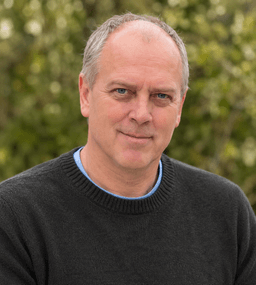

I love helping people get unstuck. There is something very satisfying about sitting alongside someone, working through a problem, and seeing them realise they can take the next step.
Sometimes that next step is small. A workflow that wastes an hour every week. An automation that almost works. A business idea that has been sitting in a notebook because nobody quite knows where to start. Sometimes it is an app that looked wonderful in the first demo and then became a tangle of errors, confusing changes, and things nobody is sure are safe.
If that sounds familiar, you are in good company. Building with AI can be exciting and frustrating in the same afternoon.
You do not have to figure it all out alone.
When I talk about agentic building, I mean working with AI coding agents that can help plan, write, test, and change software. That opens doors for people who understand a problem deeply but have never thought of themselves as developers. It also introduces a lot to learn: how to explain what you need, how to judge what the agent gives you, and when to stop and look more closely.
I enjoy helping people make sense of that. We can sit together virtually or, where practical, in person. Bring the app, the idea, the error message, or just the thing that keeps slowing you down. We can work through it at a pace that makes sense to you. My aim is for you to understand more and feel more capable when we finish.
When the app needs rescuing.
A lot of people start by describing what they want and letting a coding agent build it. You will often hear that called vibe coding. It can be a useful way to explore an idea. The difficult moment comes when the app grows beyond what you can comfortably inspect or explain.
Perhaps one fix keeps breaking something else. Perhaps you are worried about who can see customer information, where passwords and keys are stored, or whether you could recover the data if something went wrong. Those are sensible questions. There is no embarrassment in asking them.
We can look at what you have, work out what is happening, and decide what is worth keeping. Sometimes a focused repair is enough. Sometimes a part needs rebuilding. I will be honest about that. A working screen does not tell us everything about an application, and I would rather help you understand the remaining risks than pretend a quick fix settles them all.
Look at the work around the app, too.
The most useful conversation is often about the business itself. Who does this task? What happens before it? Where does the information go afterwards? What should happen when something is missing or somebody makes a mistake?
That is systems thinking in everyday terms: seeing how the pieces affect each other. We might find that a small automation, a better handover, or a simpler process helps more than another screen. Or we might discover a much better application than the one we first imagined. Your experience of the work is a big part of finding that out.
And sometimes, we could build it together.
You may know an industry, a customer, or a recurring problem that I would never see from the outside. I bring experience in AI engineering, systems architecture, databases, and turning ideas into working tools. There can be something valuable in putting those experiences together.
If it feels like a good fit for both of us, I am open to exploring a real partnership. We might start with a problem in your own business, build something useful together, and then ask who else has the same problem. Could it help other businesses in your field, even your competitors? Could we turn what we have learned into a solution that reaches further?
That is an option, not a condition of getting help. Mentoring can simply be mentoring. A collaboration deserves its own conversation about responsibilities, ownership, costs, decisions, and how both people are rewarded. I want us to meet as equals, recognise what each person contributes, and agree on something fair before either of us builds expectations around it.
Start with where you are.
You do not need a polished pitch. Tell me what you are trying to do, where you are stuck, and what success would look like for you. We can explore whether I can help, whether we would enjoy working together, and what a sensible next step might be.
I would love to see you succeed. Sometimes all it takes to get moving again is having someone beside you who can help you see the next few steps.